
Marrakesh is a city in western Morocco with a story that stretches back nearly a thousand years. Marrakesh was founded in 1062 by Yusuf ibn Tashfin and quickly rose to prominence as the capital of the Almoravid dynasty, making it a true imperial city and a cornerstone in the history of Marrakesh. Its location near the High Atlas placed it at the center of trade routes linking North Africa, sub Saharan regions, and the Mediterranean world, strengthening its political and economic influence across centuries.
Often called the Red City because of its clay colored walls and buildings, Marrakesh reflects layers of influence shaped by dynasties, religion, and global connections. From its role as the capital of the Almoravid empire to later periods under Saadian rule, the French Protectorate, and modern Morocco, the city has continually evolved while holding tightly to its identity. Today, Marrakesh stands as a vivid expression of the culture of Morocco, where tradition, commerce, and daily life exist side by side.
Koutoubia Mosque and the Foundations of Faith
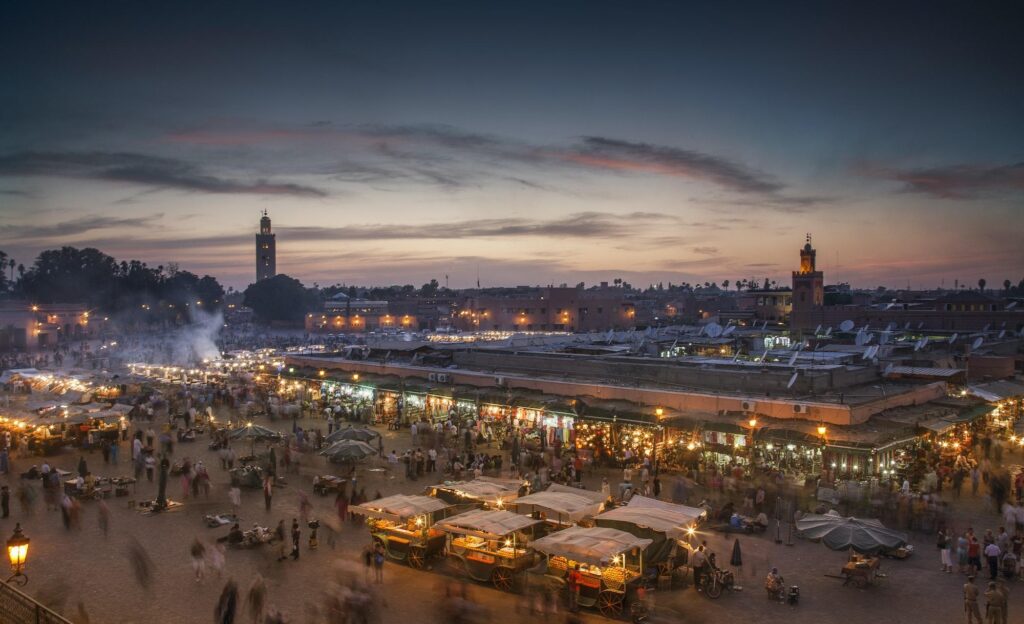
The Koutoubia Mosque is the most recognizable symbol of Marrakesh and one of the most important religious landmarks in the country. Built in the 12th century, its minaret dominates the skyline and has influenced mosque design across Morocco and the wider Islamic world. The mosque takes its name from the booksellers who once worked nearby, reflecting Marrakesh’s long standing association with knowledge and scholarship.
While visitors cannot enter the prayer hall, the mosque’s exterior offers a powerful connection to Moroccan culture and faith. Standing near the Koutoubia Mosque during the call to prayer provides a quiet moment of reflection as Moroccan people pause in their daily routines. The mosque remains a spiritual anchor for the city and a reminder of Marrakesh’s importance as a historic center of Islam in North Africa.
Jemaa el Fnaa and Everyday Moroccan Life
Jemaa el Fnaa sits at the heart of Marrakesh and captures the rhythm of daily life like no other place in the city. By day, the square hosts vendors selling spices, fresh juice, and traditional Moroccan goods alongside street performers and musicians. As evening arrives, the space transforms into a vibrant open air gathering filled with food stalls, storytellers, and the sounds of Moroccan music echoing through the crowd.
This square is more than a tourist attraction. It is where Moroccan people meet, socialize, and preserve oral traditions through storytelling and Moroccan Arabic. Sitting nearby with a glass of mint tea offers an authentic glimpse into how tradition remains deeply woven into everyday life.
Saadian Tombs and Royal Legacy
The Saadian Tombs are among Marrakesh’s most important historical sites and a direct link to the city’s 16th century past. These tombs served as the burial place of the Saadian dynasty, rulers who brought wealth, artistic refinement, and political strength to Morocco. Hidden for generations and rediscovered in the 19th century, the tombs remain remarkably well preserved.
Intricate tilework, carved cedar wood, and marble columns showcase traditional Moroccan craftsmanship at its finest. Visiting the Saadian Tombs provides insight into royal customs, religious beliefs, and architectural styles that shaped the imperial city. Nearby landmarks such as Bahia Palace further highlight Marrakesh’s elegance during this period.
Jardin Majorelle and Cultural Influence
Jardin Majorelle adds another dimension to the culture of Morocco through its artistic and international influences. Created by French artist Jacques Majorelle and later restored by Yves Saint Laurent, the garden combines exotic plants with bold design and striking blue architecture. It reflects Marrakesh’s openness to outside influence during the era of the French Protectorate.
Today, the garden remains a peaceful retreat and a symbol of how global creativity blends naturally with Moroccan culture. It stands as a reminder that Marrakesh has long inspired artists, thinkers, and travelers.
The Atlas Mountains and Life Beyond the City
Marrakesh’s proximity to the Atlas Mountains makes it a gateway to rural Morocco and traditional ways of life. The High Atlas offers mountain villages where customs tied to agriculture, family, and religious celebrations like Eid al Adha remain central. These landscapes reveal how geography shaped Marrakesh’s role as a trade hub and cultural crossroads.
Outdoor experiences in the Atlas Mountains allow visitors to understand Morocco beyond its cities. The contrast between urban Marrakesh and mountain life deepens appreciation for the country’s diversity.
Marrakesh in Modern Moroccan History
Marrakesh continued to play an important role in modern Morocco under King Hassan II, whose leadership emphasized cultural preservation alongside national development. Marrakech was founded in 1062 by Yusuf ibn Tashfin and quickly became the capital of the Almoravid empire, positioning the city as a political and cultural force in North Africa. By booking your trip with Scott and Thomas, you can ensure a seamless, luxurious, and memorable experience.
